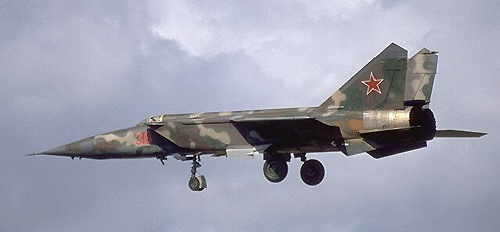
High-altitude Mach-3 class interceptor and reconnaissance aircraft. Designed by Mikoyan-Gurevich OKB to counter strategic bombers and high-speed reconnaissance platforms. Airframe primarily stainless steel with titanium leading edges; nickel-steel alloys for thermal load zones.
The MiG-25 was engineered as a pure high-speed, high-altitude interceptor to defeat Mach-3 threats (XB-70 class strategic bombers and SR-71 reconnaissance aircraft). Mission priorities were climb rate, dash speed, radar detection range, and heavy long-range missiles — not dogfight agility.
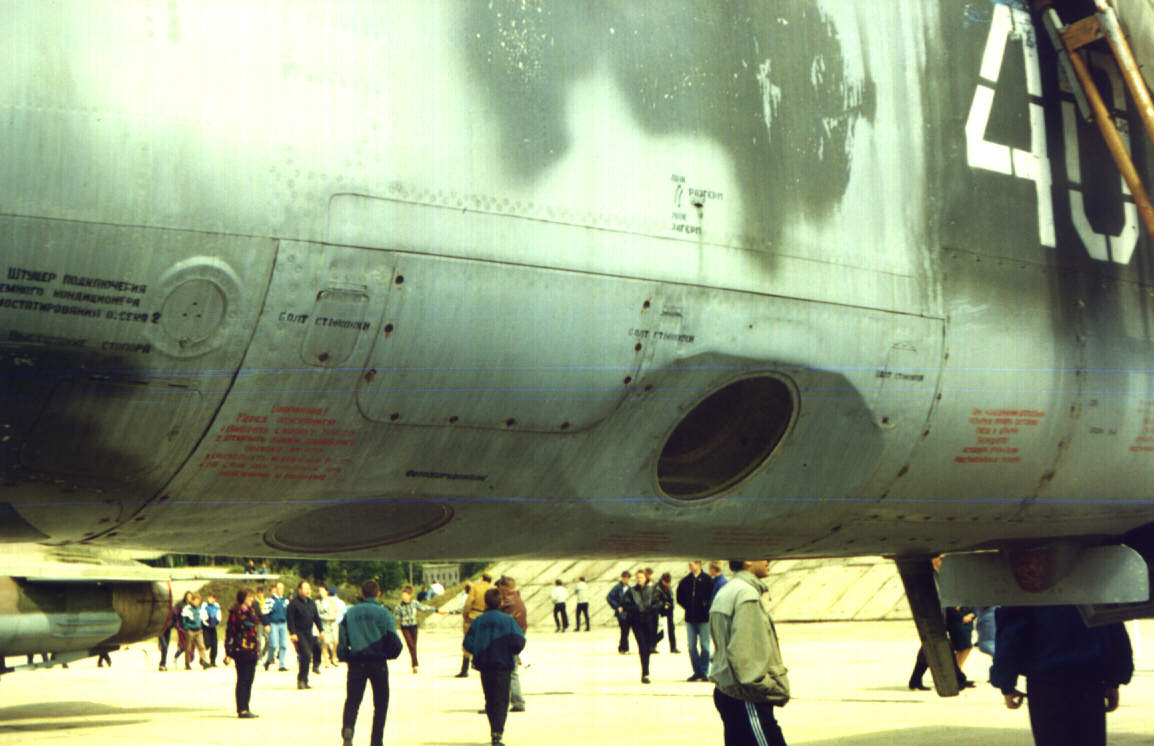
Structure uses ~80% nickel-steel alloys, ~11% aluminium, and ~9% titanium. Steel was selected for thermal stability at sustained Mach 2.5+, accepting weight penalties versus aluminium/titanium fighter designs. Leading edges and engine-bay heat shields employ titanium where peak skin temperatures exceed steel limits.
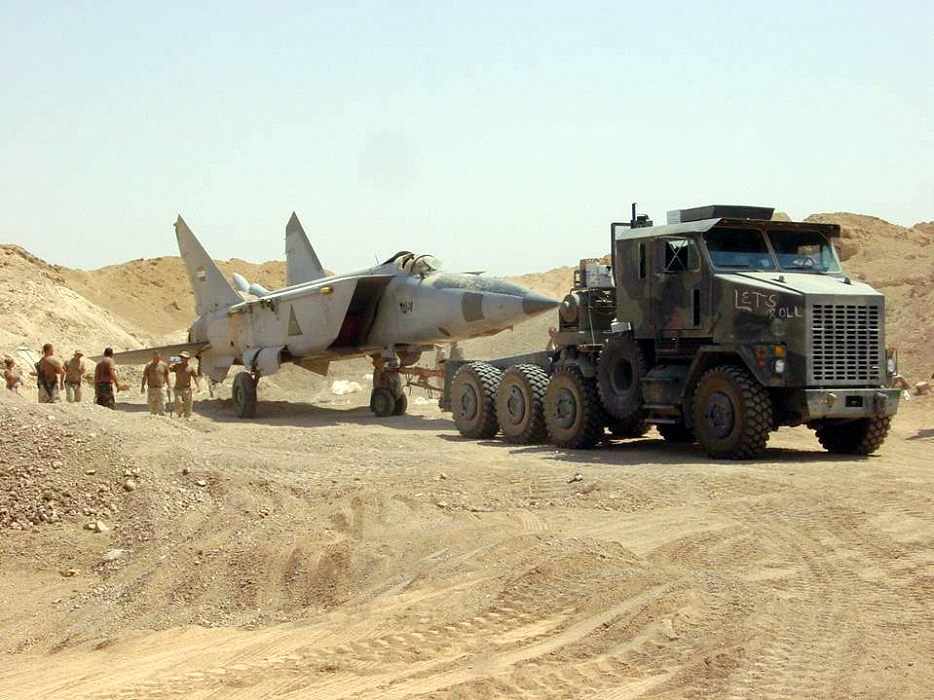
Primary users: Soviet PVO (Air Defence Forces), later export to Algeria, Iraq, India, Libya, Syria and others. Reconnaissance variants (RB series) carried optical and ELINT payloads for high-speed penetration profiles.
| Crew | 1 pilot |
|---|---|
| Length overall | 23.82 m (78 ft 2 in) |
| Wingspan | 14.01 m (46 ft 0 in) |
| Height | 6.10 m (20 ft 0 in) |
| Wing area | 61.40 m² (661 ft²) |
| Empty weight | 20 000 kg (44 092 lb) |
| Gross weight | 36 720 kg (80 954 lb) |
| Max takeoff weight | 36 720 kg |
| Internal fuel | ~14 920 kg (32 895 lb) |
| Powerplant | 2 × Tumansky R-15B-300 |
| Dry thrust (each) | 73.5 kN (16 500 lbf) |
| A/B thrust (each) | 100.1 kN (22 500 lbf) |
| Max speed (high alt) | Mach 2.83 ops / ~3 000 km/h |
|---|---|
| Max speed (clean limit) | Mach 3.2 (engine risk) |
| Max speed (sea level) | ~1 200–1 300 km/h IAS |
| Cruise (econ) | ~Mach 0.9 |
| Initial climb rate | ~208 m/s (40 950 ft/min) |
| Service ceiling | 20 700 m (67 900 ft) |
| Absolute altitude (record) | 37 650 m class (Ye-266M) |
| Combat range (typical) | ~1 730 km |
| Ferry range | ~2 575 km |
| Takeoff / landing | Long runways required |
| g-limits | +4.5 / limited negative |
| Endurance (mission) | Profile-dependent · high fuel burn @ A/B |
| Engine | Tumansky R-15B-300 (later R-15BD-300) |
|---|---|
| Type | Single-spool afterburning turbojet |
| Dry thrust | 73.5 kN (16 500 lbf) each |
| Afterburning thrust | 100.1 kN (22 500 lbf) each |
| Combined A/B | ~200.2 kN |
| Inlet system | Variable ramps · 2D side inlets |
| Nozzle | Variable-area convergent-divergent |
| Fuel type | T-6 / similar high-flash jet fuel |
Twin R-15 turbojets are optimized for high-Mach dash. Variable-geometry side inlets manage shock systems into the compressors. Sustained afterburner use produces extreme fuel consumption and thermal loading on the steel airframe and engine bays.
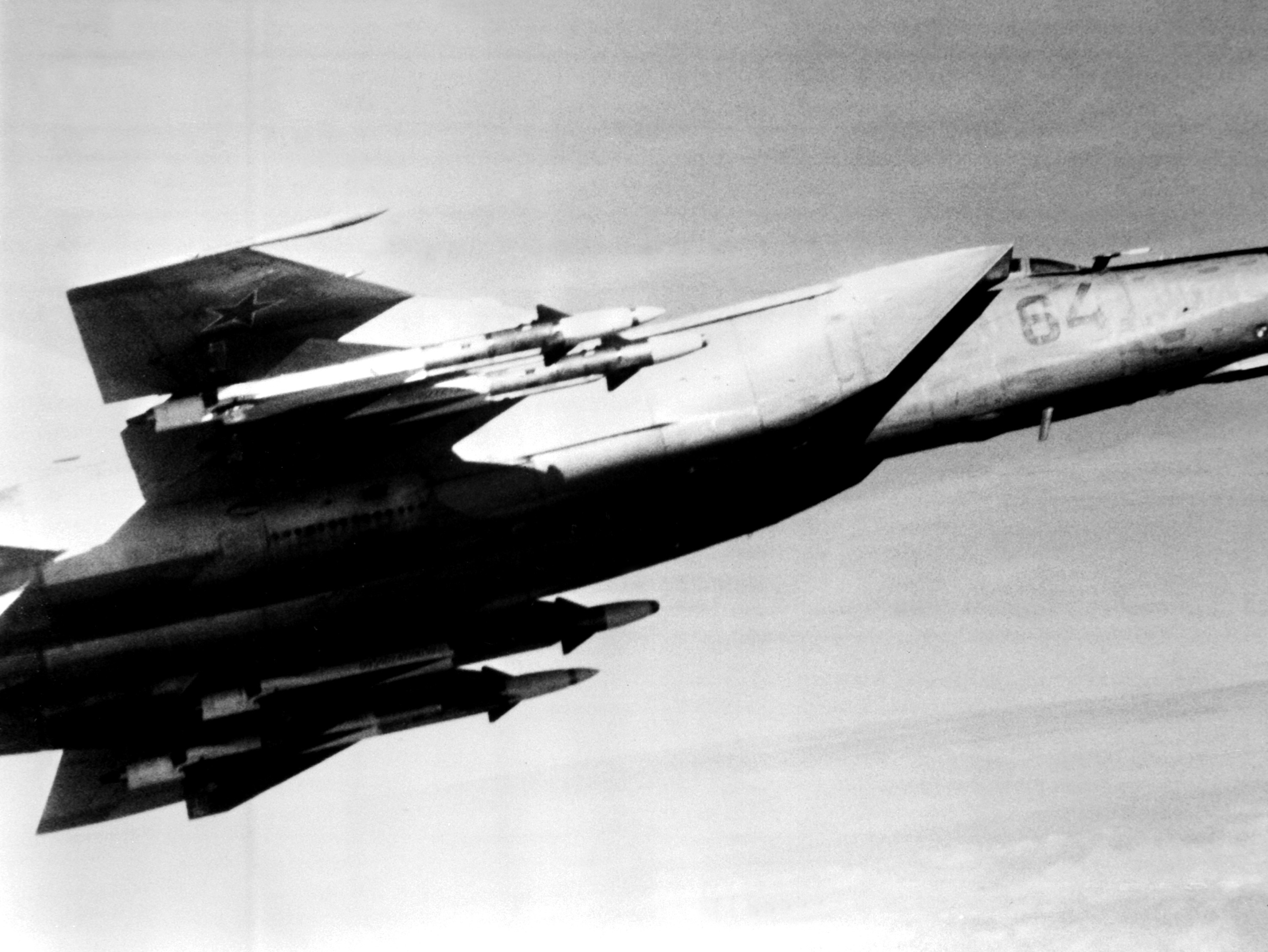
Primary long-range AAM. Semi-active radar (R-40R) and infrared (R-40T) variants. Large missile optimized for high-altitude bombers; limited off-boresight vs modern AAMs.
Short-range IR dogfight missile available on later PD configurations (outer stations in place of some R-40 pairs).
Anti-radiation missile for SEAD variant MiG-25BM “Foxbat-F”. Dedicated suppression of ground-based air-defence radars.
| Wing pylons (×4) | R-40R / R-40T primary |
|---|---|
| Typical mix | 2× radar + 2× IR |
| Internal gun | None (missile-only fighter) |
| Bomb load (RB) | Limited free-fall on recon-bomber types |
| External fuel | Not primary design focus |
Baseline single-seat interceptor. RP-25 Smerch-A radar, 4× R-40. Backbone of early PVO high-altitude defence.
NATO: FOXBAT-AImproved interceptor with Sapfir-25 radar and better IR missiles options. PDS = field-upgraded P airframes.
NATO: FOXBAT-EHigh-speed photo-recon and recon-bomber series. Cameras, ELINT, optional bombs. Primary strategic recon platform.
NATO: FOXBAT-BSpecialized electronic intelligence and SLAR configurations for collecting emitter data at high speed/altitude.
NATO: FOXBAT-DDefence-suppression aircraft armed with Kh-58 ARMs and specialized avionics for radar hunting.
NATO: FOXBAT-FTwo-seat conversion trainers for interceptor and recon pipelines. Second cockpit replaces radar/recon nose volume.
NATO: FOXBAT-CUnlike contemporary aluminium fighters, the MiG-25’s primary structure is welded and riveted stainless steel (including VNS-2 / similar high-strength steels). This allowed production using existing Soviet industrial capacity and provided thermal margin for kinetic heating at Mach 2.5–3.0.
Titanium is concentrated on leading edges, inlet lips, and local hot spots. Aluminium appears in lower-temperature secondary structure. The result is a heavy airframe with exceptional high-speed stability but poor sustained turn performance and high landing speeds.
Values are representative of production interceptors as publicly reported; exact alloy mixes vary by block and variant.
PVO requirement for interceptor capable of defeating high-Mach strategic threats. Mikoyan begins Ye-155 work.
Prototype flight testing begins. Development prioritizes speed, altitude, and radar/missile integration over maneuverability.
Western intelligence observes MiG-25; initial overestimates of capability drive F-15 program acceleration.
MiG-25P enters PVO service. Production ramps across interceptor and reconnaissance lines.
Lt. Viktor Belenko lands a MiG-25P in Japan. Detailed Western technical exploitation revises threat assessments (steel structure, limited look-down radar, high fuel burn).
Improved radar and missile options fielded. Export variants proliferate in Middle East and South Asia.
Combat employment in Middle East conflicts; gradual retirement as Su-27 / MiG-31 and Western types replace high-alt intercept roles. Limited museum and residual operators remain.
| Primary threat | Mach 3 bombers / recon |
|---|---|
| Design philosophy | Speed · altitude · missiles |
| Not optimized for | WVR dogfight · sustained turns |
| Successor roles | MiG-31 Foxhound (intercept) |
| Western response | F-15 Eagle program impetus |